HOME / DIALCOM AI

Dialcom AI

MY ROLE

Product Designer

YEAR

2026

INDUSTRY

Dialcom

PROJECT OVERVIEW

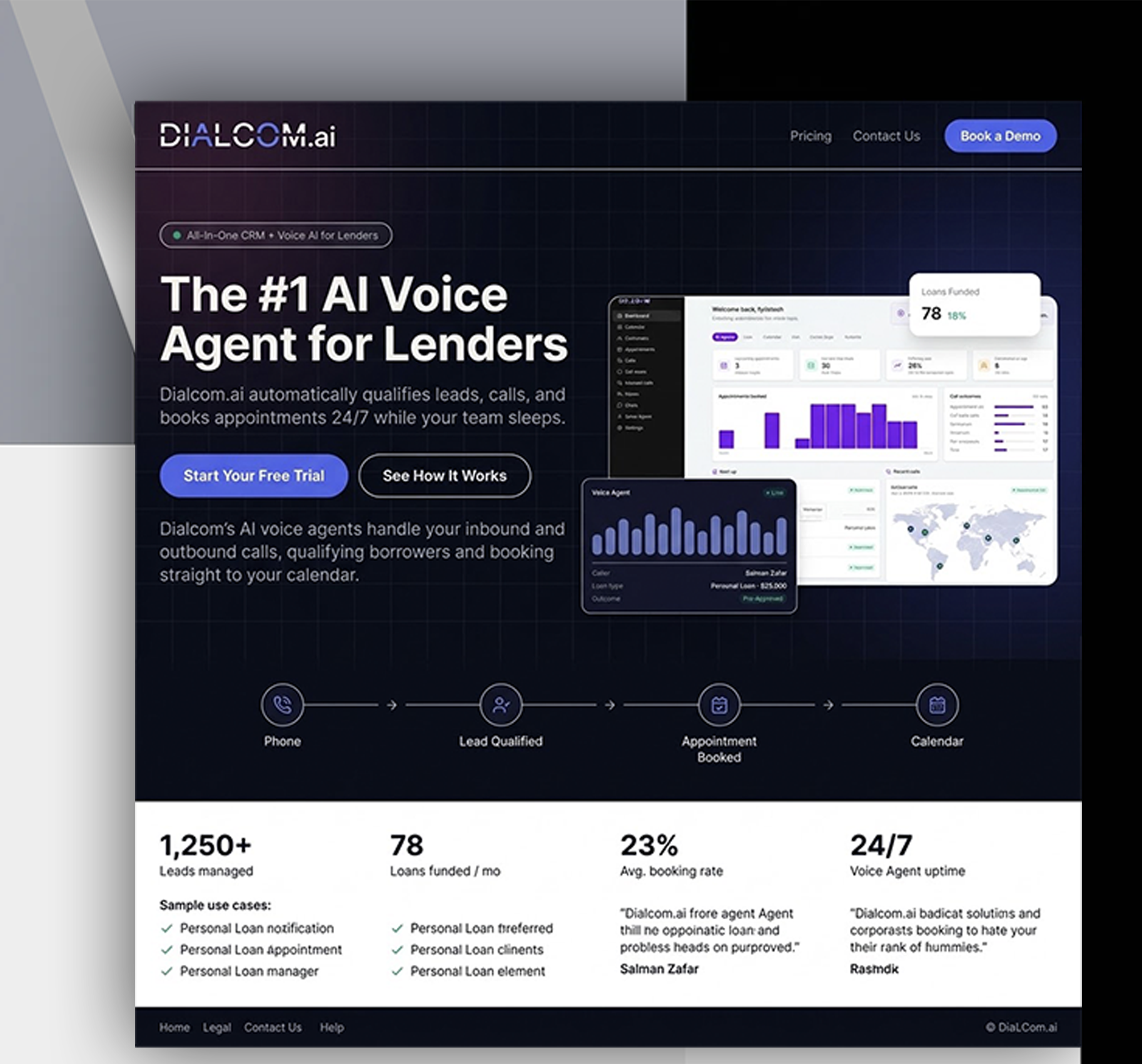
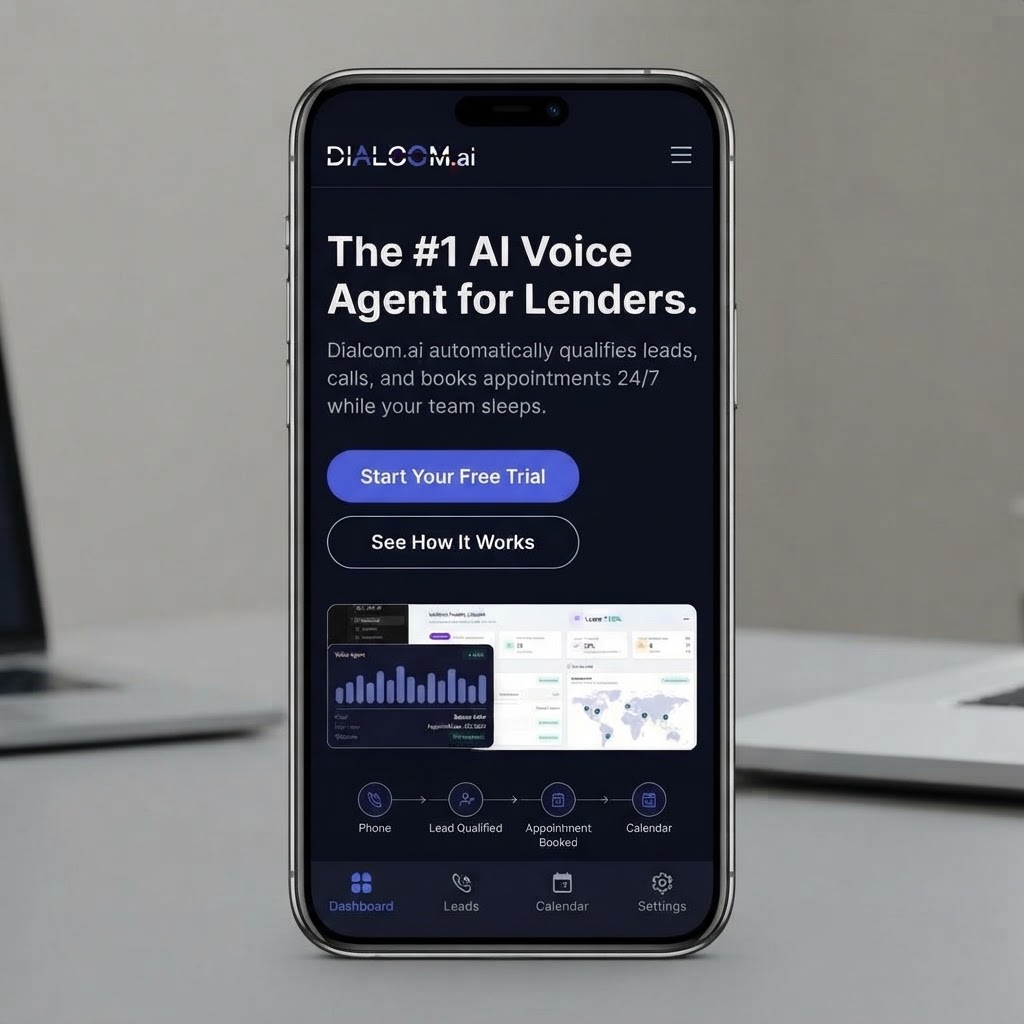
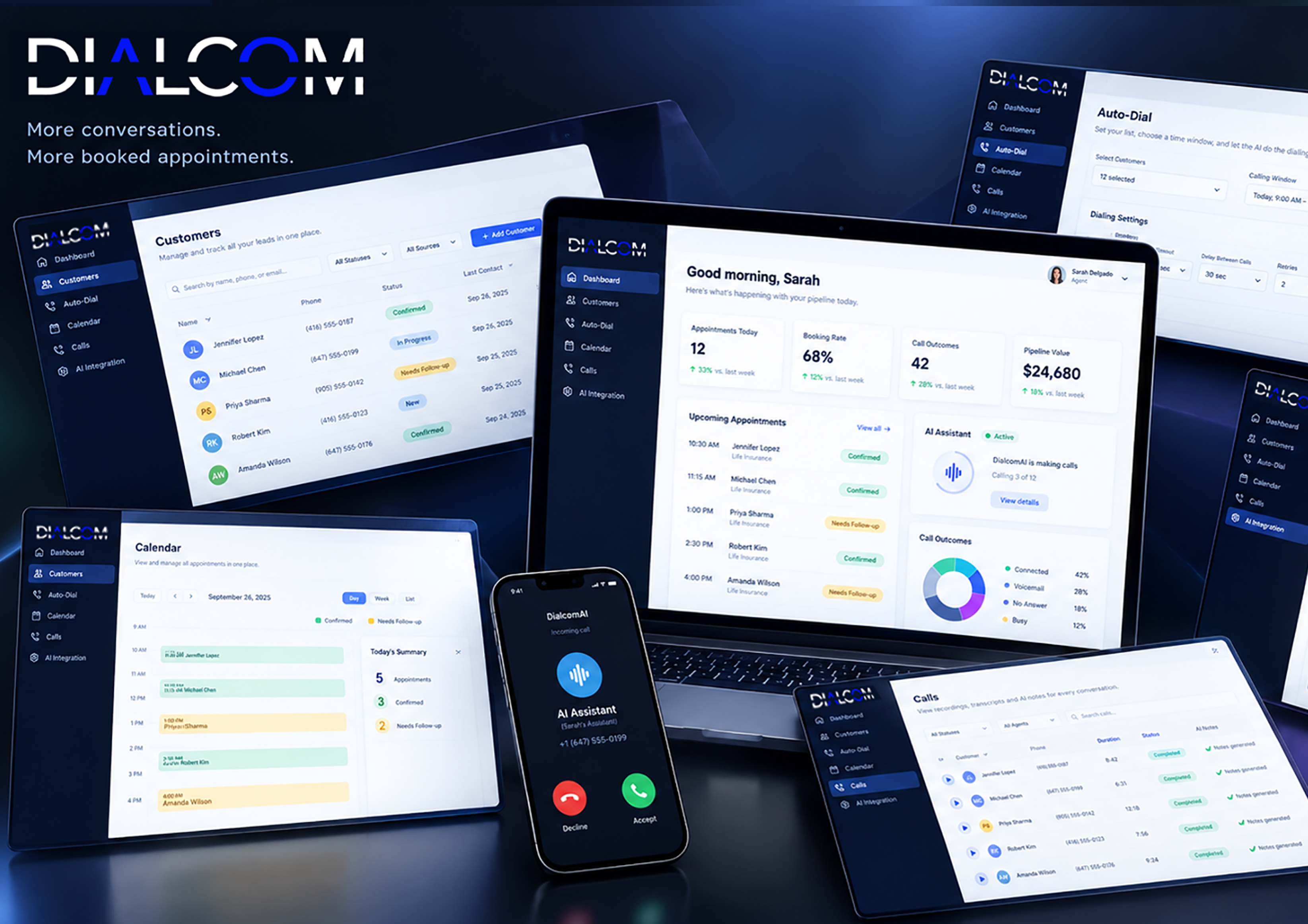
DialcomAI is an AI-powered CRM built for insurance and financial agents. It combines customer and appointment management with an AI voice assistant that can call, qualify, and book leads using the agent's own voice and script. I designed the product end to end, including the user flows, interface, landing page, and overall experience, then worked directly with a developer to build it. The product started as a simple CRM tool built while I was working for a Lifensure group, and eventually evolved into a live subscription product with different plans and AI auto-dial features.

VISIT LIVE SITE

Problem

Independent insurance agents can generate leads faster than they can follow up. A Meta ad quiz may produce leads in a week than an agent can reach manually, creating a gap between lead generation and first contact. DialcomAI’s AI Auto-Dial was designed to close that gap by making the call before a lead goes cold. But automation introduces another challenge: insurance is built on relationships, while regulations increasingly require AI calls to identify themselves. The design question became whether a disclosed AI, speaking as a named agent’s extension rather than a bot, can preserve trust.

Research & Insights

I surveyed 20 insurance agents and 20 leads separately, comparing where their expectations aligned and where trust broke down. Agents saw clear value in AI qualification and booking, with 86% open to trying Auto-Dial within three months, while 63% of leads were very unlikely to stay on an AI-led first call. Across both groups, trust depended on oversight and verification rather than disclosure wording alone. I also evaluated nine competitors across AI dialing, insurance focus, pricing, and solo-agent fit. This research shaped DialcomAI’s trust-focused AI Integration screen and its agent review and verification controls.

Solution

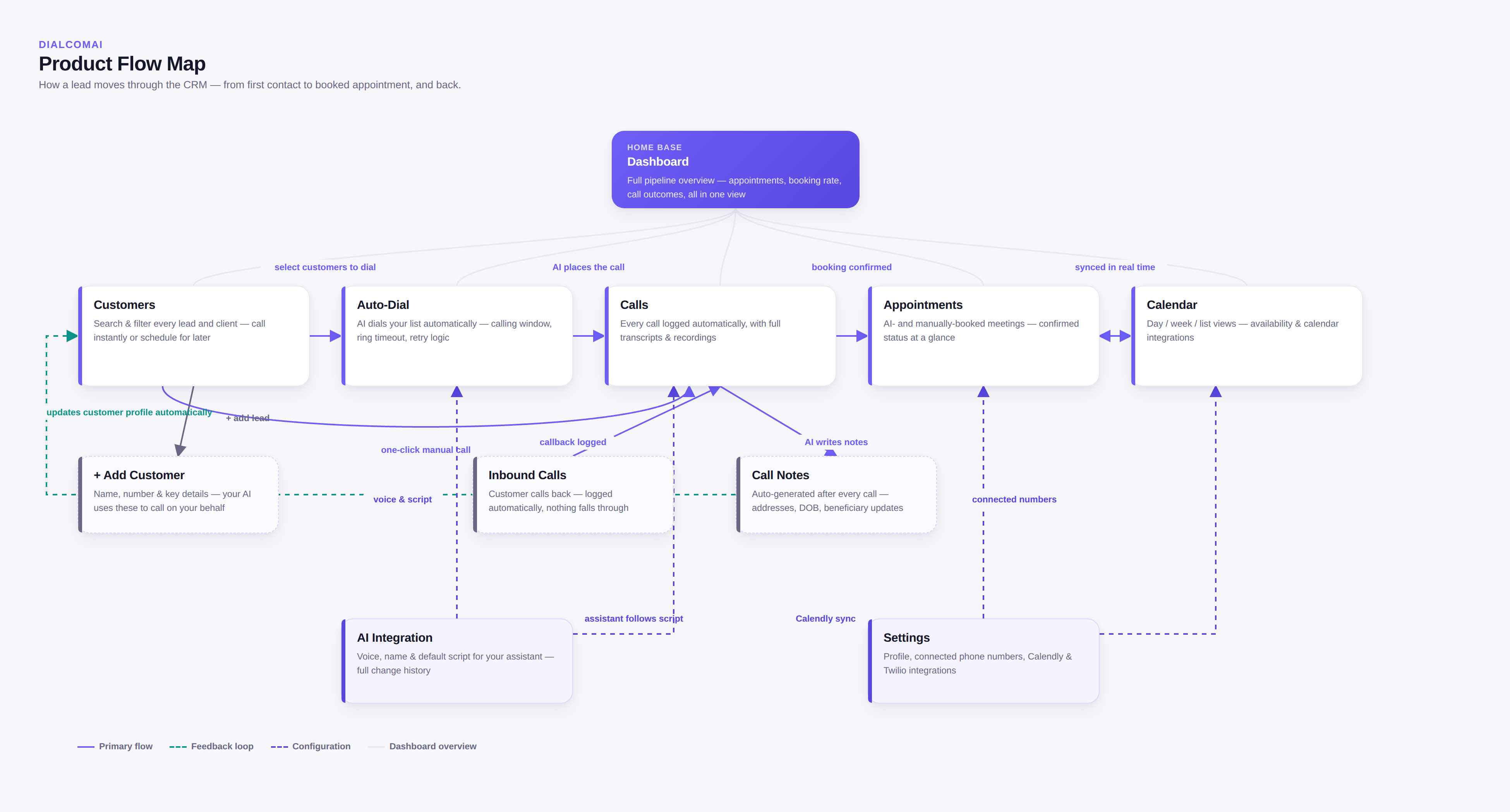
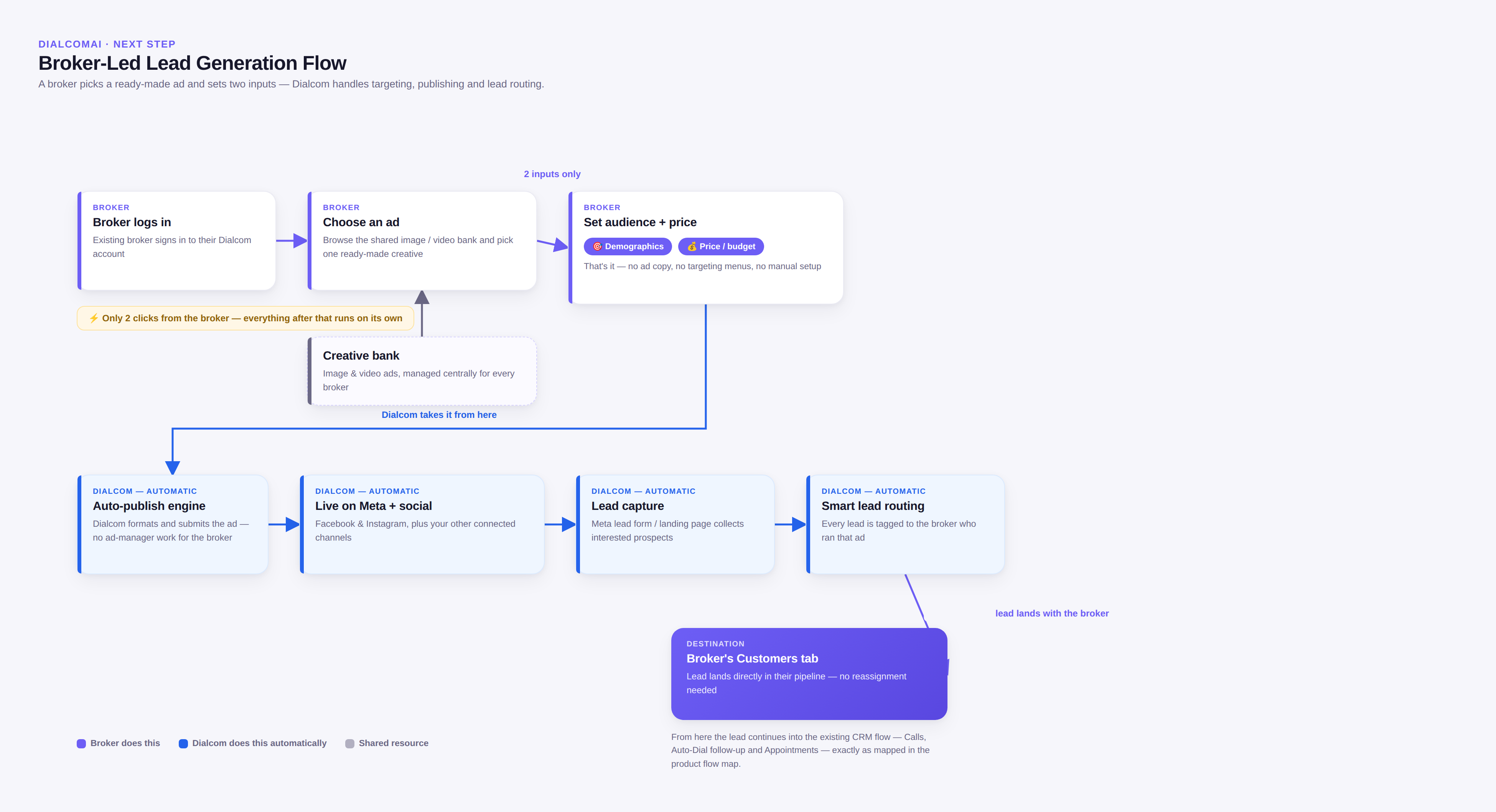
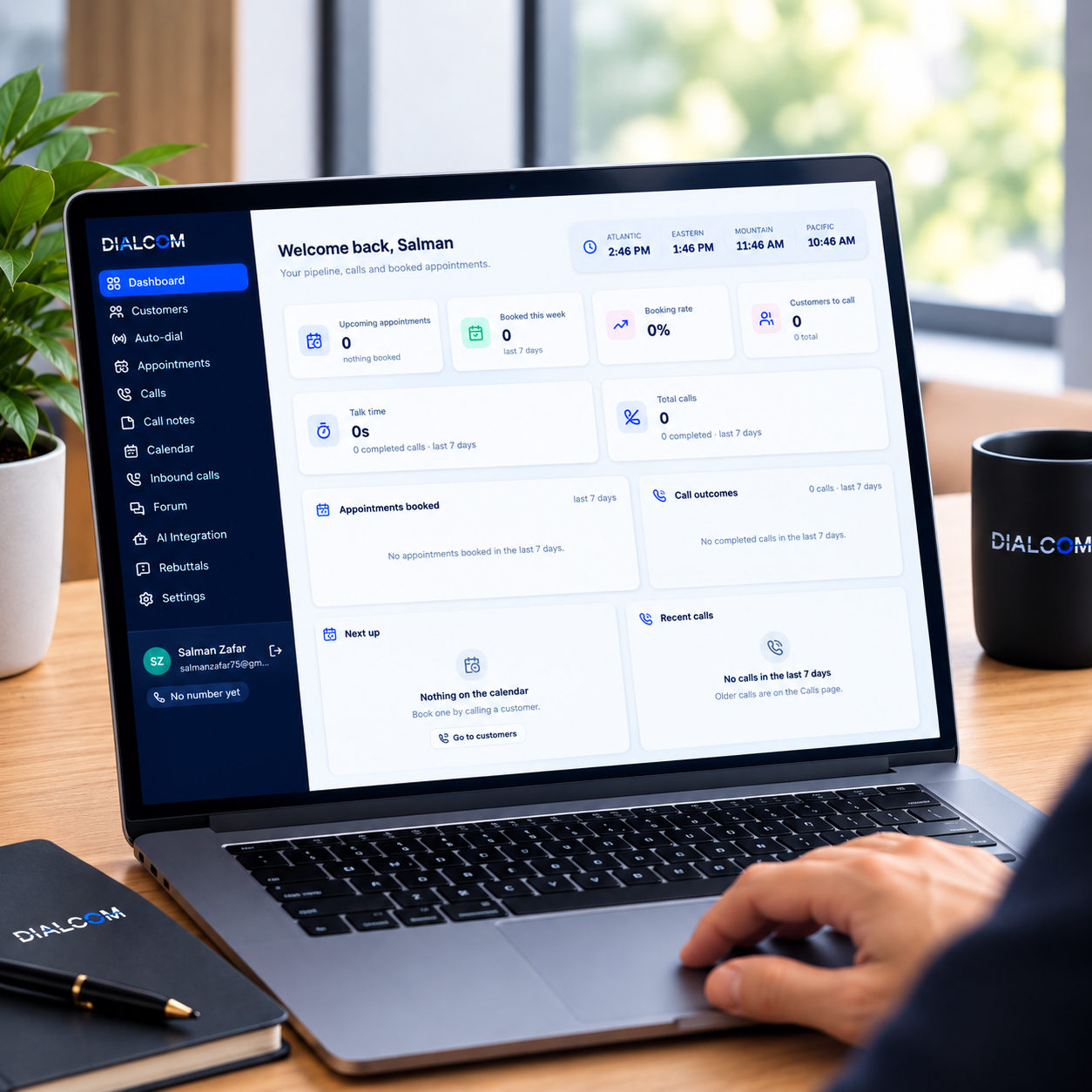
The product is structured around the full journey from new lead to booked appointment, keeping calling, scheduling, and notes within one CRM. The shipped product includes a dashboard for appointments, booking rates, call outcomes, and AI status; a searchable customer view; Auto-Dial with agent-controlled timing and retries; a unified calendar for agent and AI bookings; and a calls view with recordings, transcripts, and AI-generated notes. The AI Integration screen turns the trust research into a control surface, allowing agents to set the assistant’s name, voice, and script while maintaining a full change history and automatic inbound call logging.
What I Learned

Process and Iterations

1. Qualitative Research
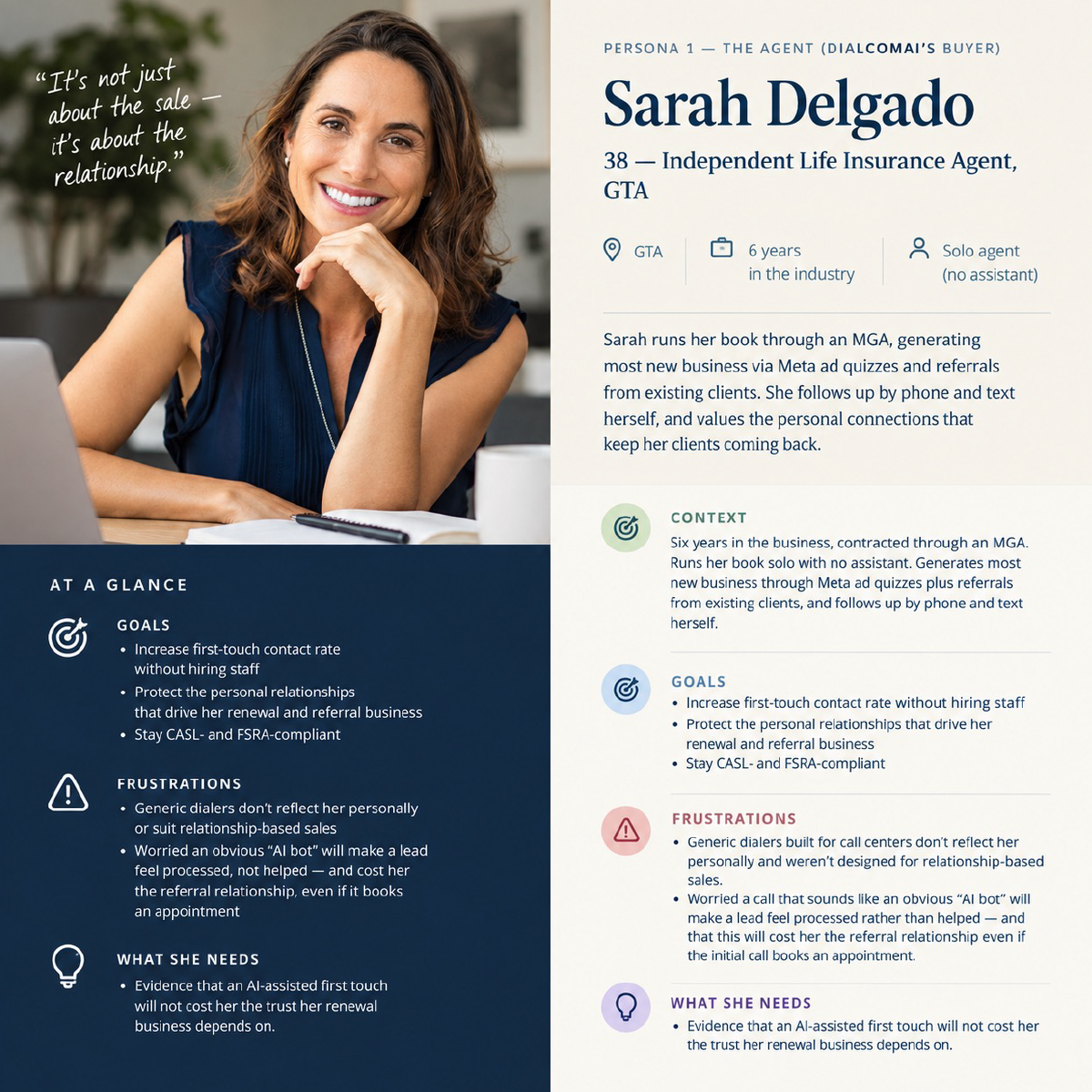
I started with research involving two groups: insurance agents and insurance customers. I created survey questions to understand their needs, pain points, expectations, and concerns around using an AI agent for insurance outreach.
2. Research Outcomes
I analyzed the responses to identify common patterns, key pain points, trust concerns, and opportunities. These insights helped define the problems the product needed to solve.
3. Competitive Analysis
I reviewed existing AI, CRM, and insurance solutions to understand how other products handle lead management, communication, follow-ups, scheduling, and customer interactions. This helped identify opportunities for DialcomAI.
4. AI Agent Scripts & Voice Design
I developed and refined the AI agent scripts, focusing on how it should communicate with customers. I also explored voice tone, quality, personality, and conversational style to make the interaction feel clear, natural, and trustworthy.
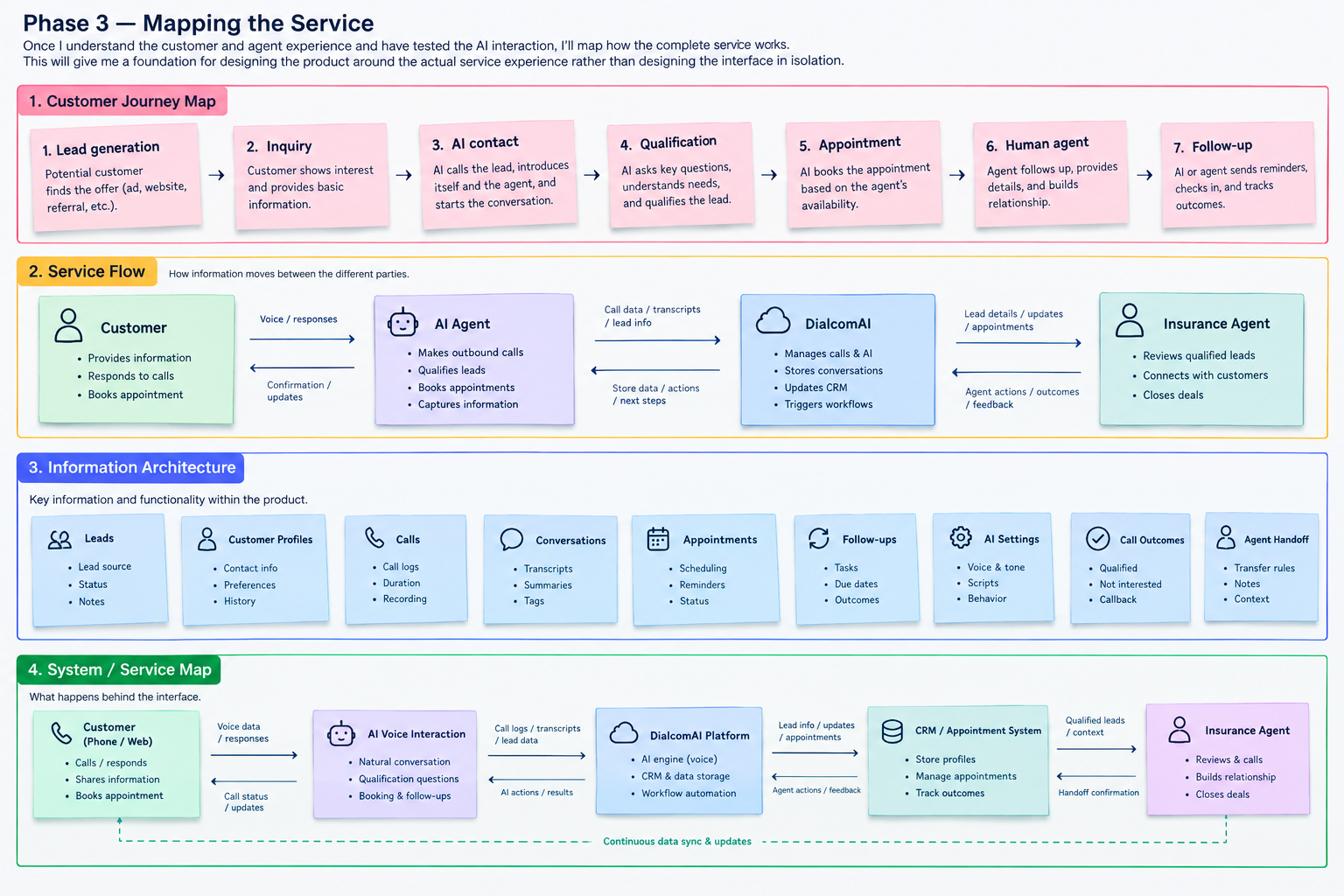
5. CRM Architecture & User Flows
Based on the research and requirements, I created the information architecture and mapped the CRM structure, including leads, customer profiles, call history, appointments, follow-ups, and AI-assisted actions.
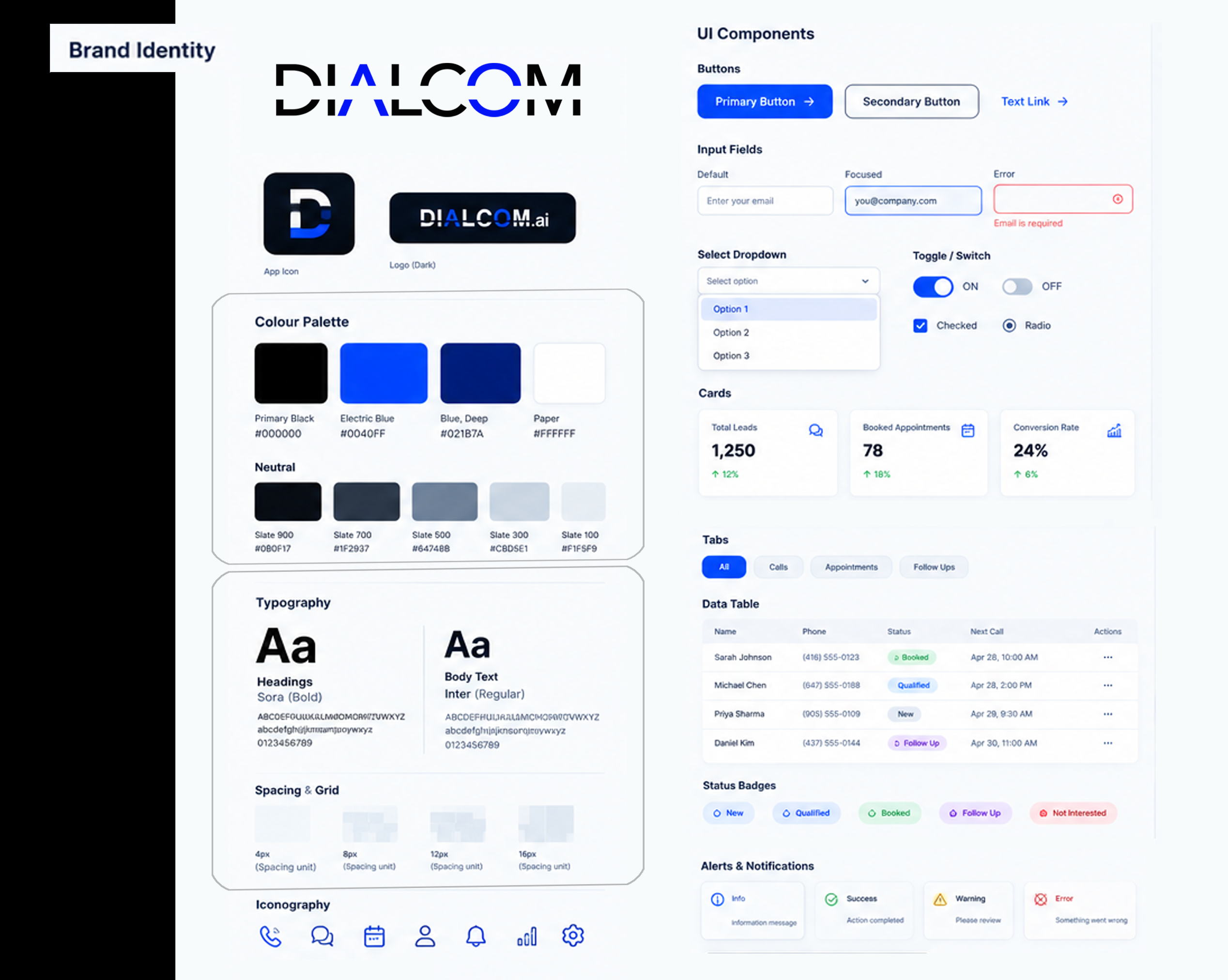
6. High-Fidelity Design & Interaction
I translated the architecture and user flows into high-fidelity UI designs and interactive prototypes. I focused on creating a clear interface that allows insurance agents to understand what the AI is doing, review information, and take control when needed.
7. Iteration & Refinement
I refined the experience based on feedback and usability considerations, improving the interactions, visual hierarchy, and overall workflow to create a more intuitive experience for agents.
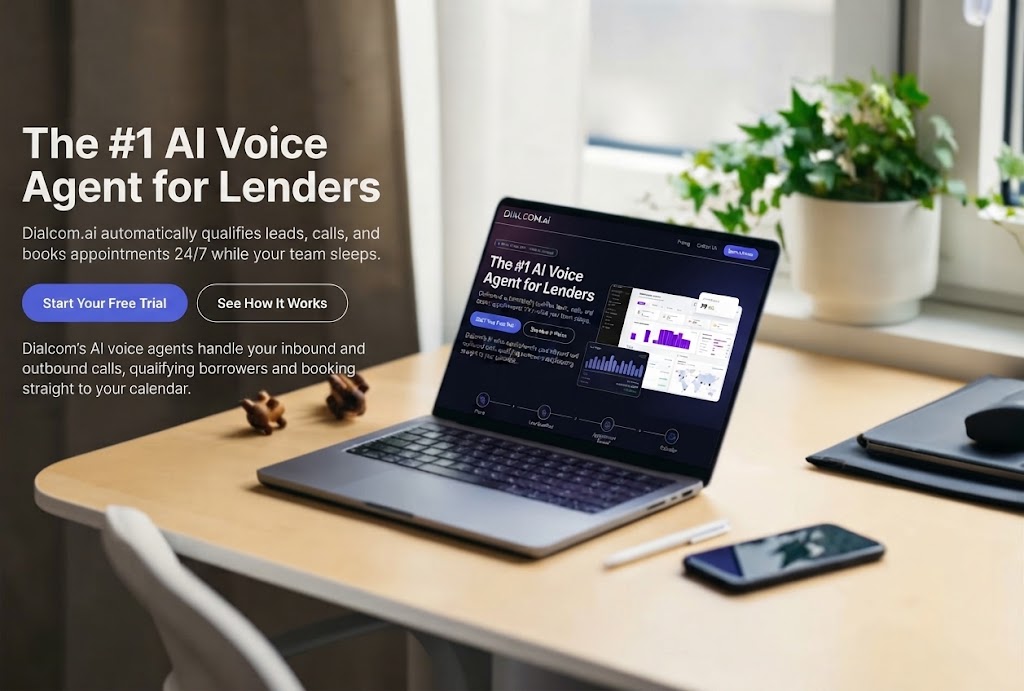
Dialcom AI process and iterations
Deliverables User flows, CRM dashboard, customer records, calendar, AI calling controls, landing page.
Tools used: Figma, FigJam and Photoshop, Claude, Vapi.ai.
Time Line : 20 weeks
Team: 5 members
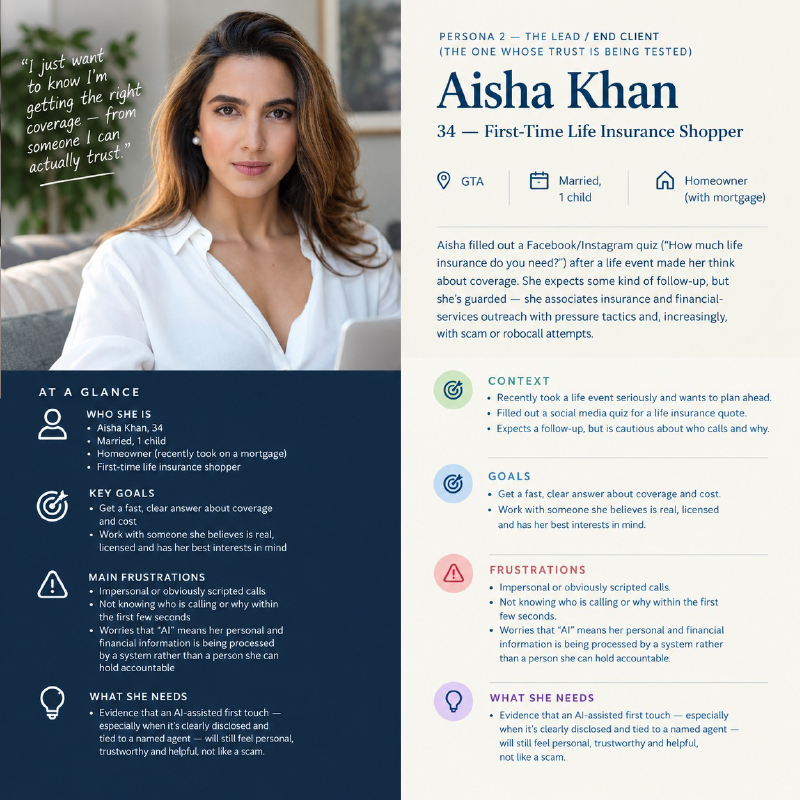
Dialcom AI prototype 1
Dialcom AI prototype 2
Dialcom AI prototype 3
Dialcom AI prototype 4
Dialcom AI prototype 5
Dialcom AI prototype 6
Dialcom AI prototype 7
Dialcom AI prototype 8
Dialcom AI prototype 9

Outcome

DialcomAI is a working product currently running a pilot, making real calls for an insurance agent and learning from call data. Research directly shaped several product decisions: the AI discloses itself clearly, speaks as a named extension of the agent, and provides change history and script review before each call. The research revealed a significant trust gap: 86% of agents were open to trying Auto-Dial within three months, while 63% of leads rejected an AI-led first call despite disclosure. After mapping nine competitors, the AI Integration screen became a trust control—not simply a settings page.