HOME / INSURANCE

Insurance

MY ROLE

UI/UX Designer

YEAR

2025

INDUSTRY

Lifensure

PROJECT OVERVIEW

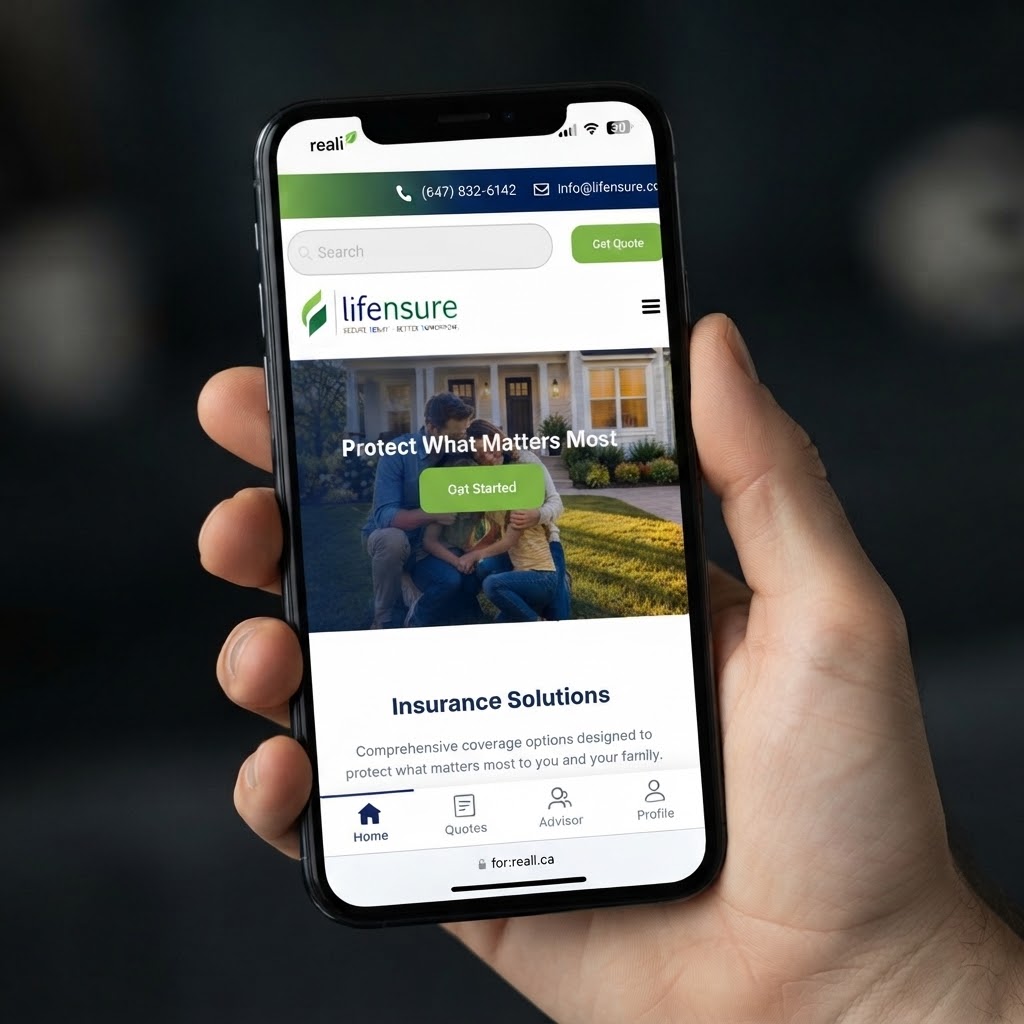
LifEnsure is a comprehensive Canadian life insurance brokerage and lead generation platform designed for independent agents to seamlessly capture, qualify, and convert prospects. Managing the end-to-end UX/UI design, I transformed a client brief into an intuitive B2C digital experience. The platform integrates deeply into a broader ecosystem—connecting Meta advertising, targeted email nurture sequences, and an AI-powered phone agent—to effortlessly guide prospects from initial interest through to a qualified insurance consultation.

VISIT LIVE SITE

Problem

The core tension was balancing conversion with trust in a high-consideration, regulated category like life insurance. Asking too little up front yielded unqualified leads, while asking too much created an intimidating wall. Furthermore, failing to establish independent brokerage credibility made visitors assume a single-carrier sales funnel. The previous experience either lacked trust or front-loaded form fields. The brief required designing a conversational flow to qualify leads without friction—bridging a multi-channel journey from Meta ads to a final phone conversation.

Research & Insights

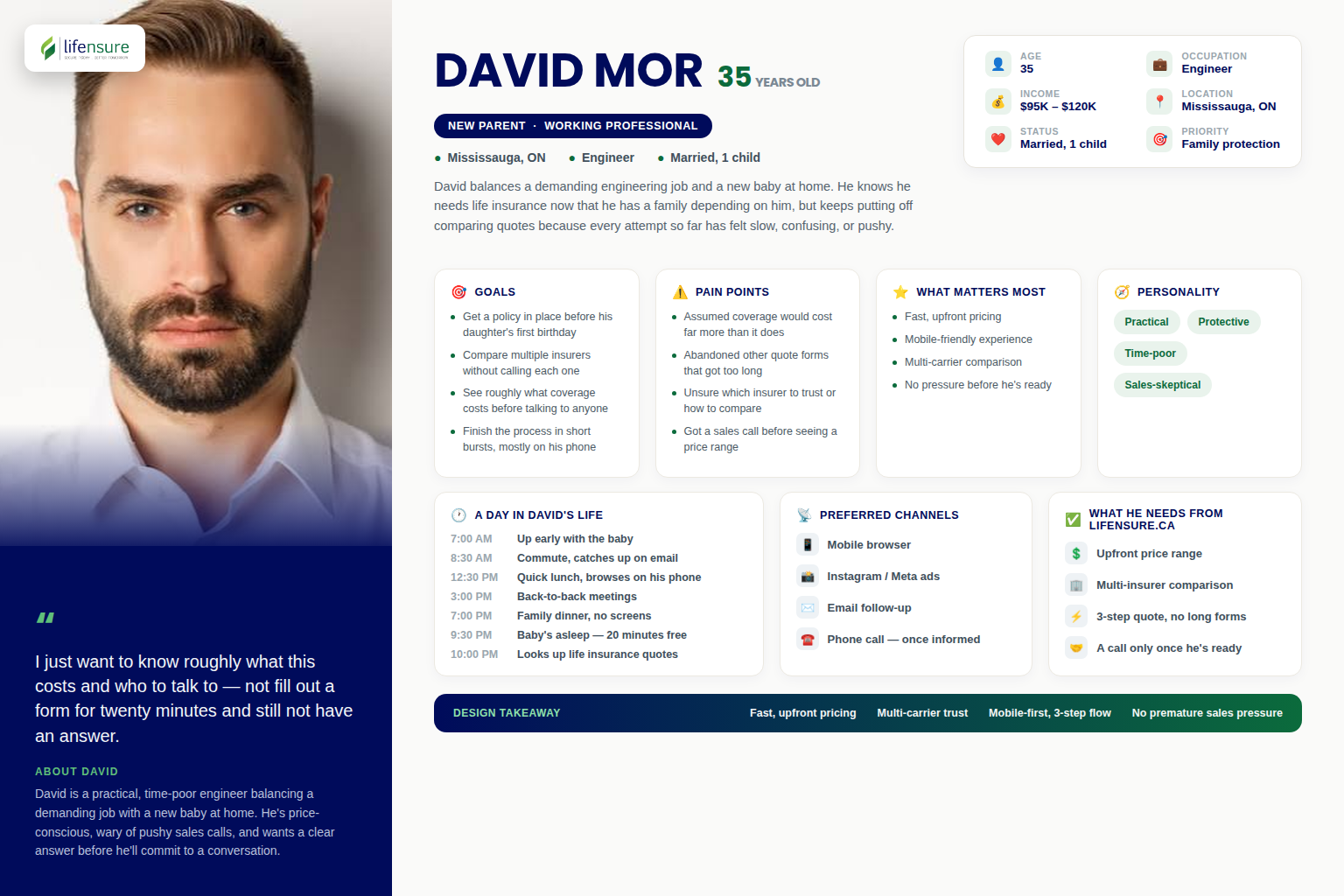
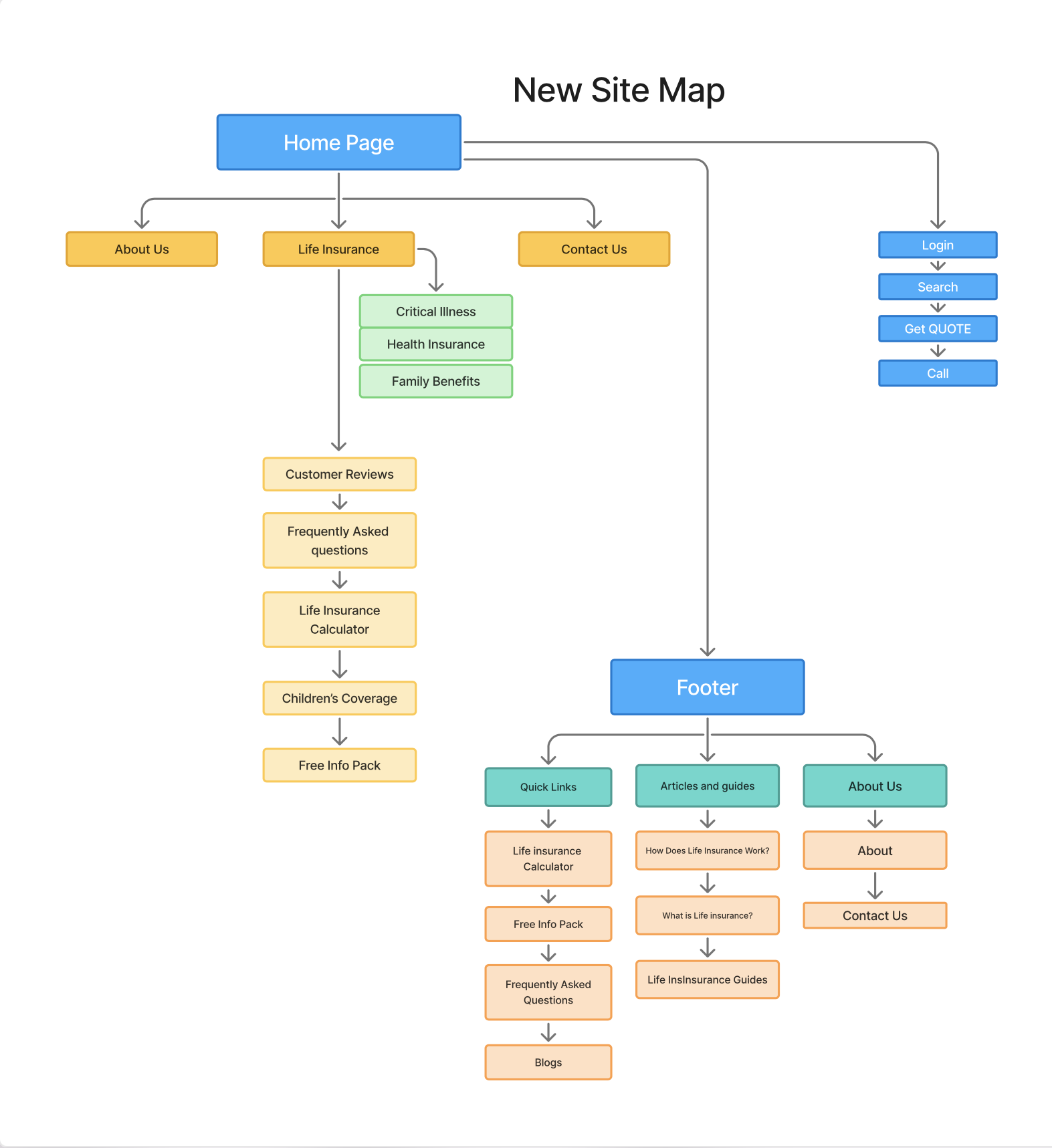
Holistic Funnel Vision: Prioritizing multi-stage integration over siloed site optimization, viewing the website as a bridge to human advisors and AI bots.
Trust over Friction: Realizing that in high-consideration insurance, reducing anxiety through transparency beats stripping away fields blindly.
Qualitative Velocity: Using practitioner interviews and live funnel data to uncover true drop-off reasons over slow lab testing. Actionable Handoffs: Shifting the goal from immediate online checkout to capturing clean, qualified inputs that feed downstream conversion systems effectively.

Solution

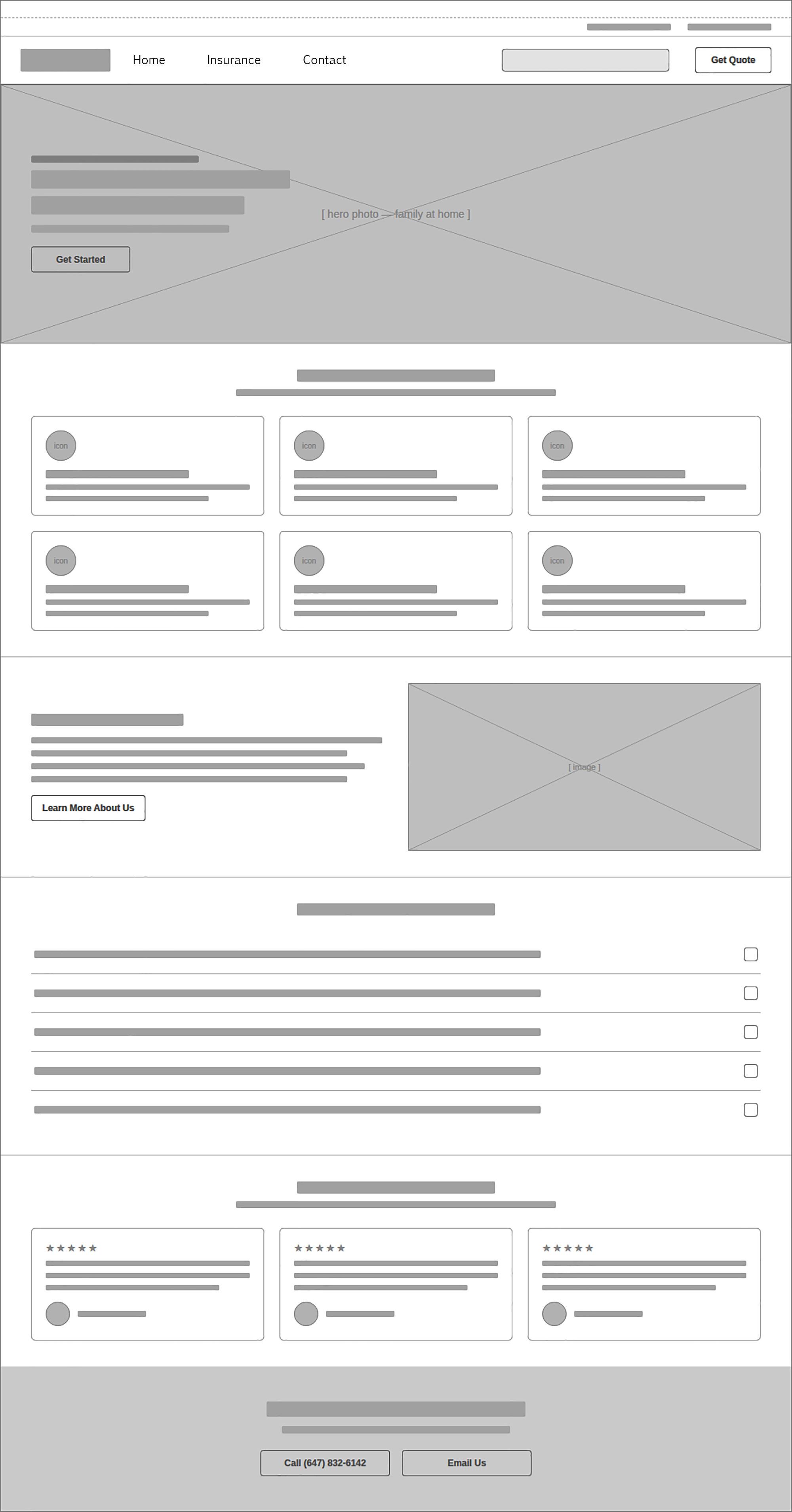
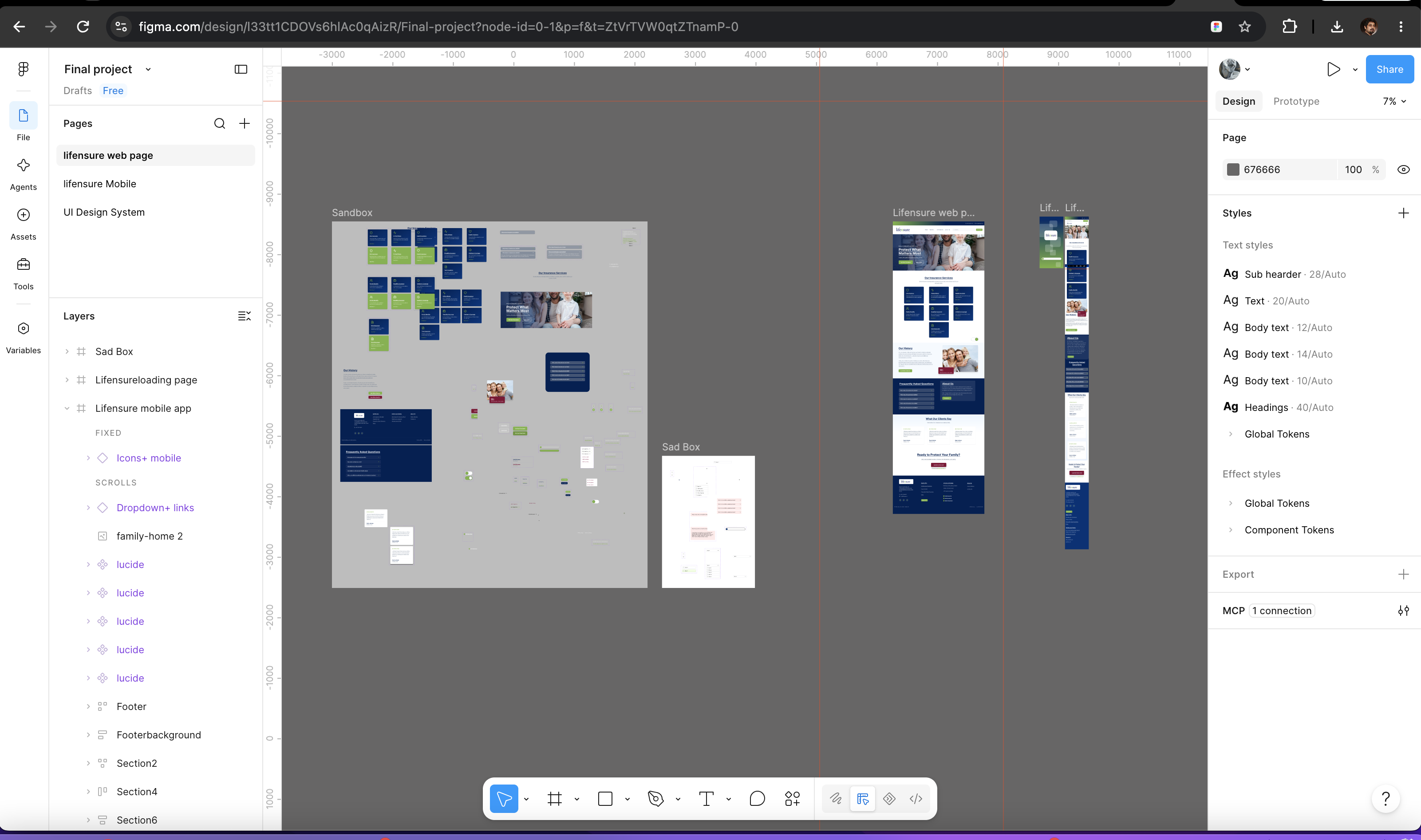
The quote journey was streamlined into three low-commitment steps: coverage details, contact information, and review. This structure keeps visitors engaged before seeing pricing. Research themes directly informed the design: credibility was established via corporate typography and above-the-fold independent licensing; transparency was added through explicit step indicators and purpose statements; and friction was minimized by deferring complex medical history to follow-up calls. Designed in Figma, the corporate aesthetic rivals top competitors.
What I Learned

Process and Iterations

Research & Discovery The research approach prioritized a qualitative, practitioner-led mix over large-scale studies. This enabled rapid signal extraction from active lead-gen funnels and frontline operators:
Stakeholder Interviews: Consulted the agency founder and active agents to define what constitutes a "qualified" lead and identify exact drop-off points in the legacy funnel.
Funnel Data Analysis: Audited live call recordings, follow-up notes, and email/phone-bot sequences to uncover friction points, high drop-off fields, and instances of intentional user "junk data."
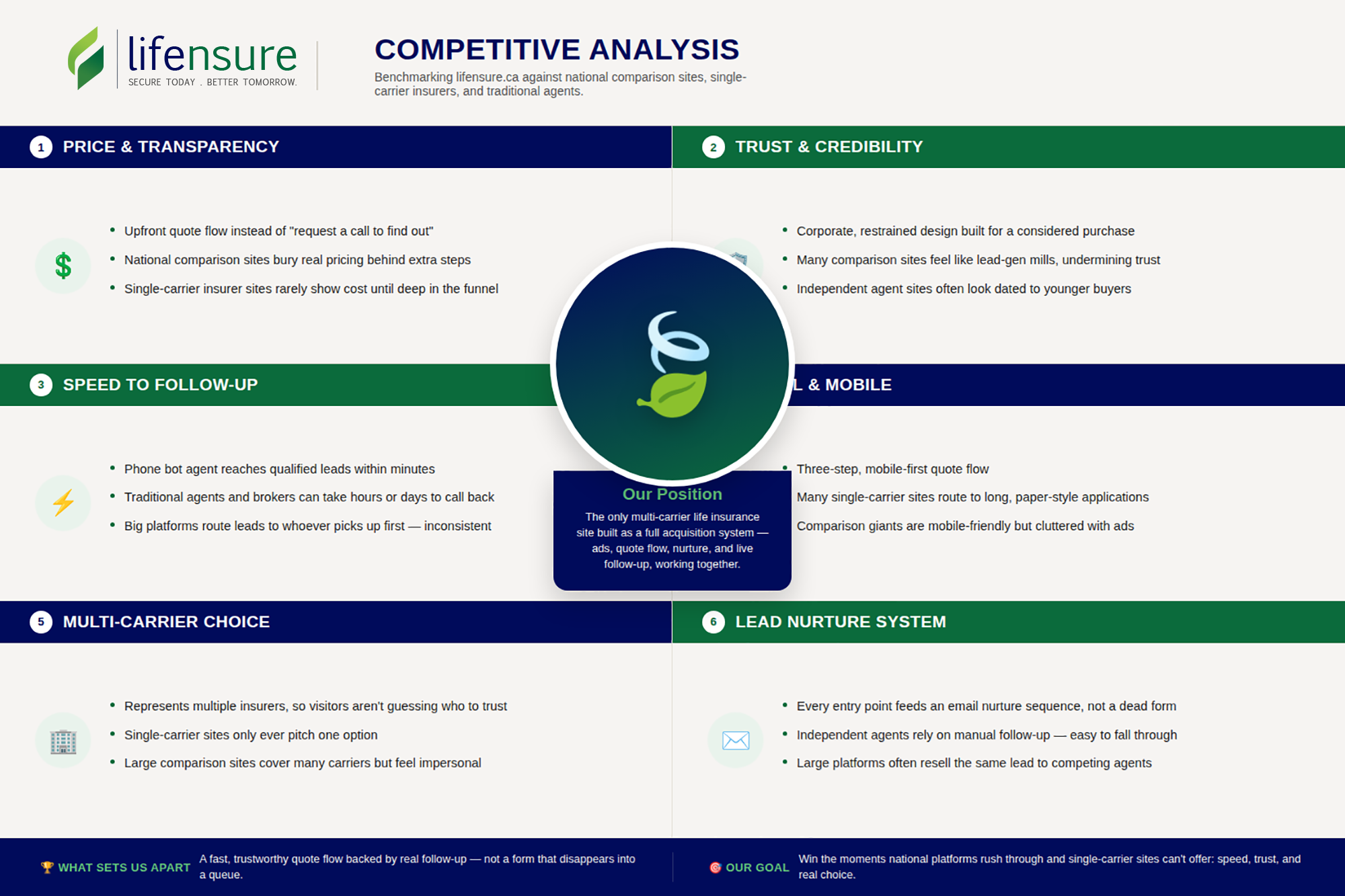
Competitive & Heuristic Benchmarking: Evaluated competing Canadian brokerage sites using Nielsen's heuristics, focusing specifically on trust, clarity, and error prevention.
Proxy Usability Testing: Synthesized informal visitor feedback directly from active Meta ad comment threads and phone-bot call transcripts to understand user sentiment.

Insurance process and iterations
Insurance prototype 1
Insurance prototype 2
Insurance prototype 3
Insurance prototype 4
Insurance prototype 5
Insurance prototype 6
Insurance prototype 7
Insurance prototype 8
Insurance prototype 9

Outcome

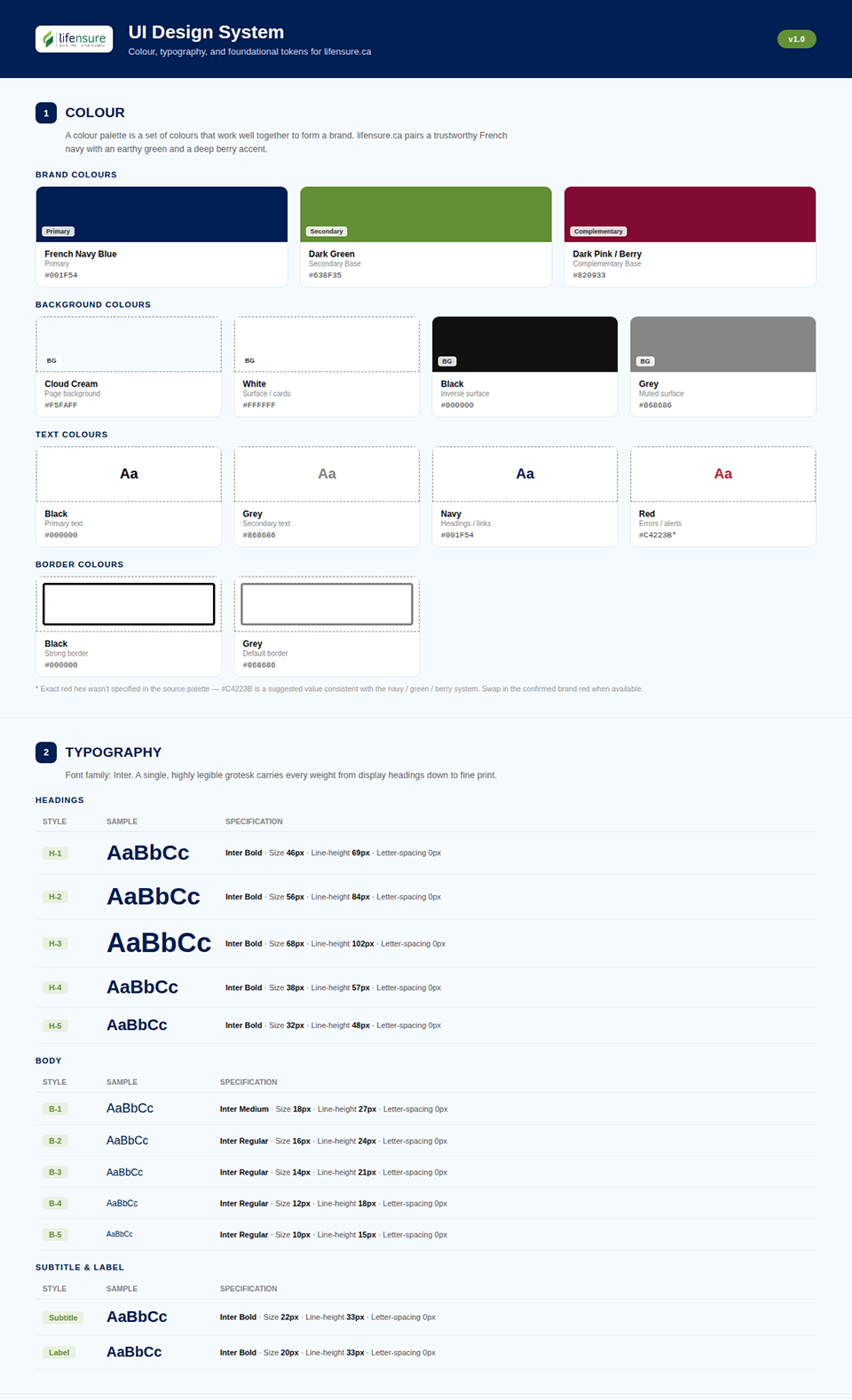
LifEnsure.ca is a multi-provider life insurance lead-generation site, connected to Meta ads, email nurture and an automated phone agent. The three-step quote flow kept the journey short and reassuring, so visitors were never asked for more than they needed at each stage. A calm corporate identity and a reusable design system gave every touchpoint, from the first ad to the follow-up call, the same look and feel. Results reduced average onboarding time by 10% through iterative design improvements Cut drop-off in the the quote flow by up to 50% Reduced support tickets by roughly 80% by resolving the riction points.