HOME / SPORTS

Sports

MY ROLE

Research to Design assignment

YEAR

2026

INDUSTRY

OpenSports

PROJECT OVERVIEW

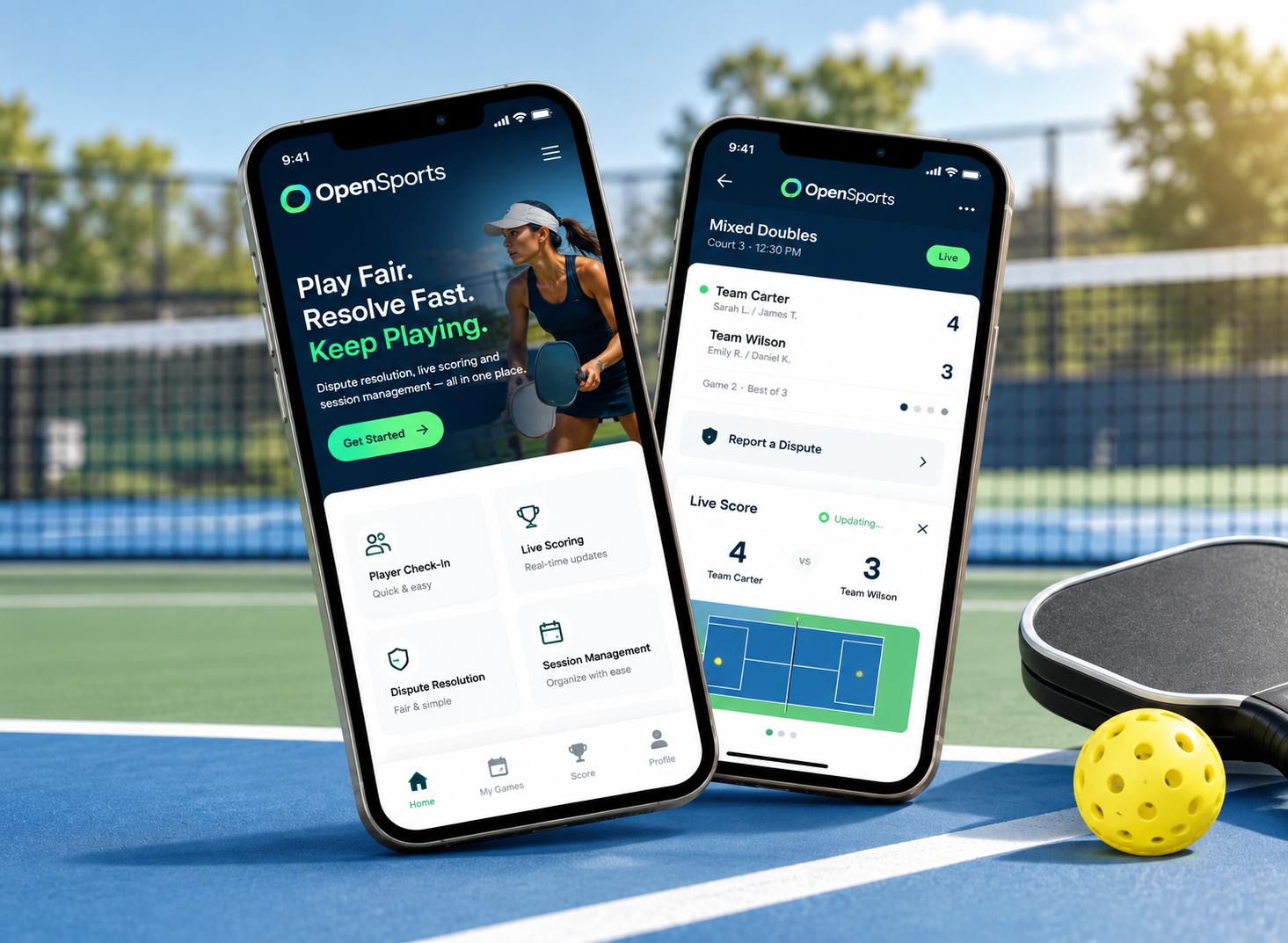
OpenSports is a mobile web/app that helps recreational sports organizers manage live sessions, including player check-in, court assignments, scoring, and disputes. Our project focused on making these tasks faster, clearer, and easier to manage during an active game.

VISIT LIVE SITE

Problem

Our biggest challenges were simplifying player check-in and designing a dispute flow that would not interrupt gameplay. Check-in needed to help organizers quickly see who had arrived and manage players without slowing down the session. For disputes, we needed to make the decision clear while giving organizers enough information to confidently resolve an issue.

Research & Insights

We used competitive analysis, stakeholder meetings, field research, and usability testing. We found that organizers often manage the session while also playing, making quick decisions especially important. We also identified friction in the player check-in process and confusion around disputed scores. These findings helped us focus on clearer workflows, better visibility, and fewer unnecessary decisions.

Solution

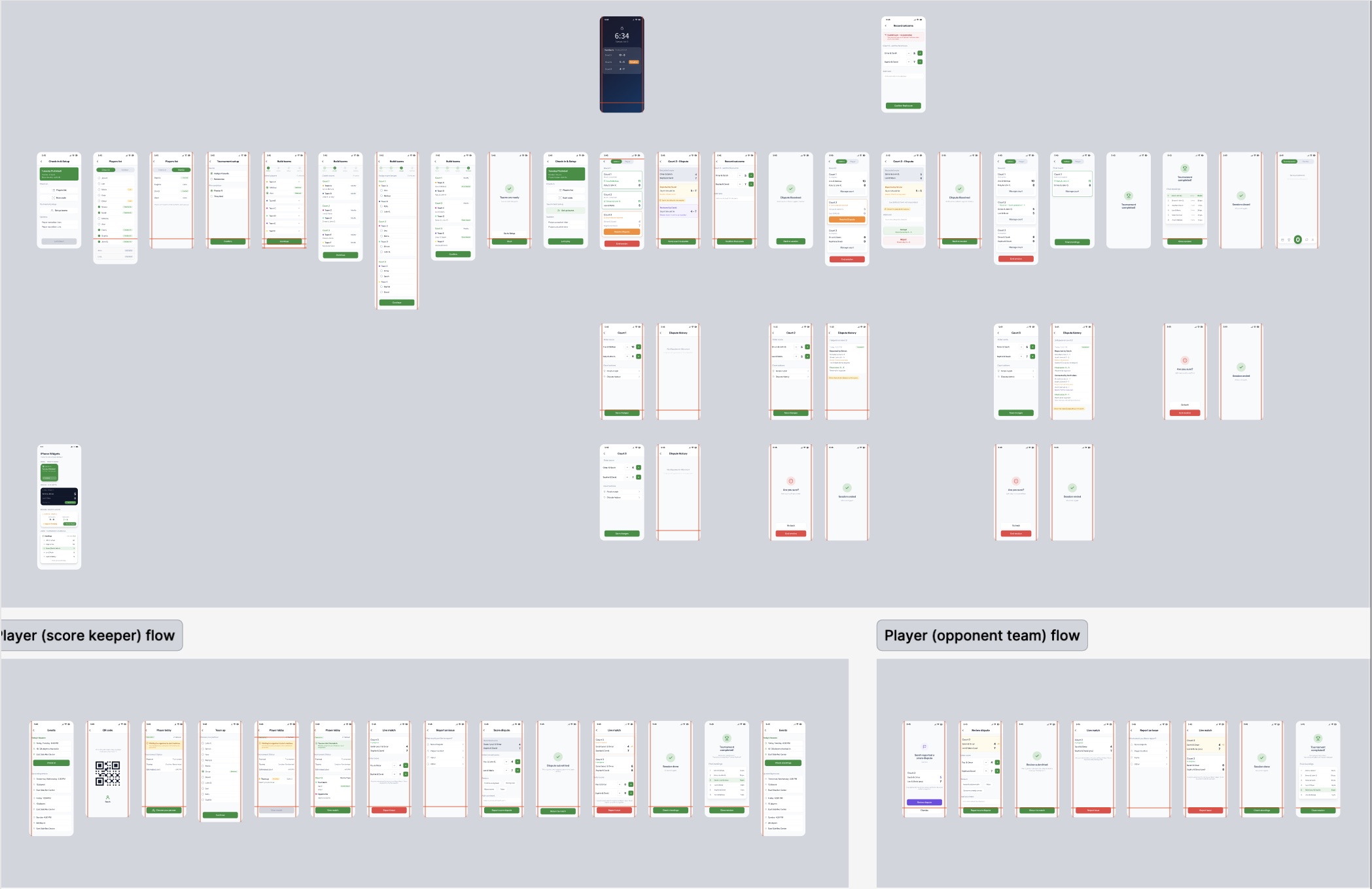
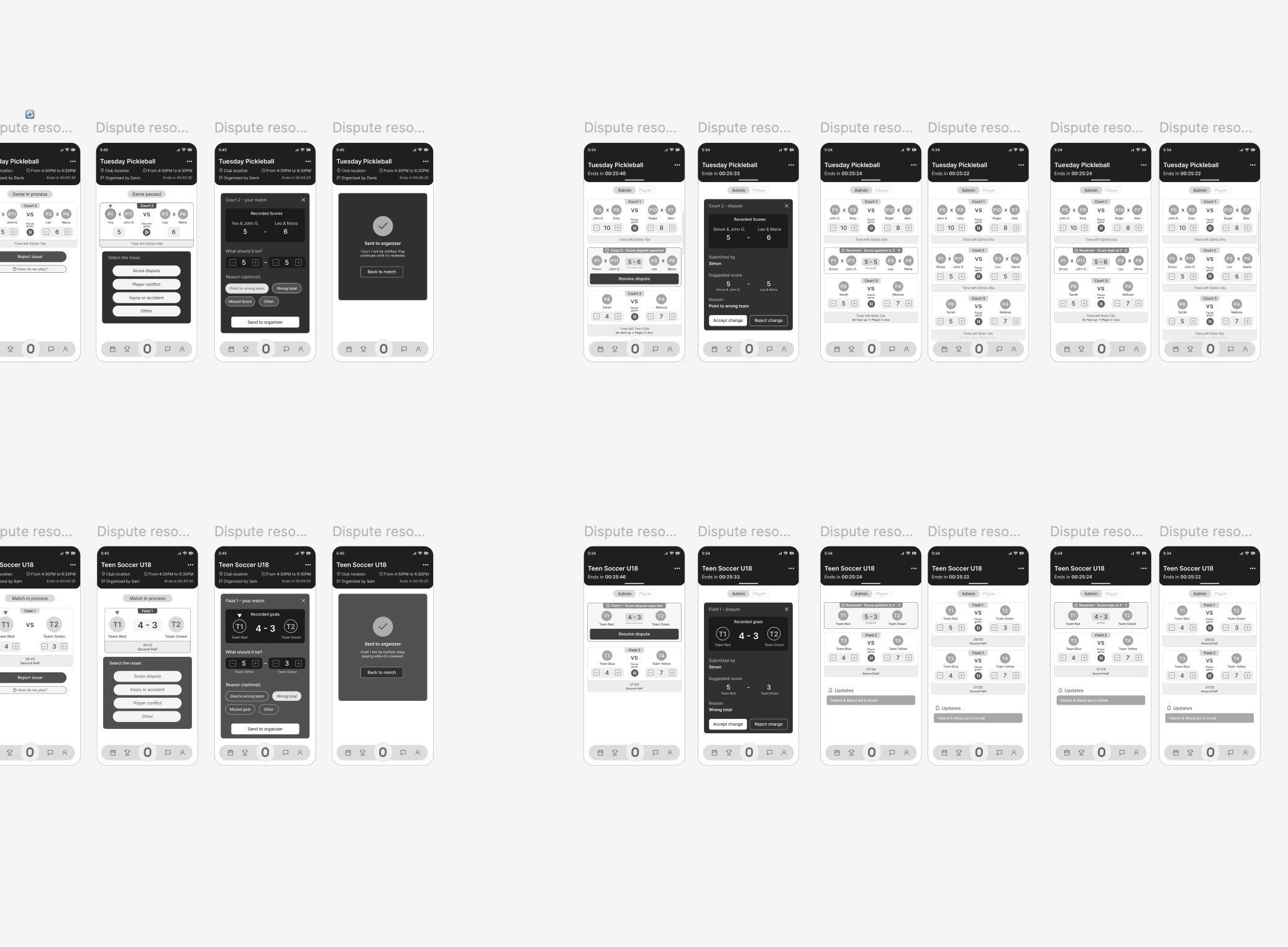
We redesigned the key organizer workflows with clearer navigation and faster actions. For check-in, we focused on making player status easier to understand and manage. For disputes, we created a simple flow connecting the player, opponent, and organizer through the same recorded information. We reduced the final decision to two clear actions: Accept Change or Reject Change. We also explored a lock-screen scoring widget to reduce the need to leave the game.
What I Learned

Process and Iterations

Our process and iterations were built from the same research findings and shared facts. We developed the system through three stages of fidelity, moving from rough sketches to an interactive mid-fidelity prototype and finally to a polished high-fidelity design. At each stage, we tested, reviewed, and refined the flow to ensure the experience remained clear, consistent, and aligned with the needs of organizers.
Sports  process and iterations
https://www.figma.com/board/4qEb9lS2kuGjkWyknhuwtV/Design-Studio-1?node-id=0-1&p=f&t=eApfQmfdoKuWpiKG-0
https://www.figma.com/design/t4sBC2drgOM9V5rmF0LgFf/Wireframes-OpenSports?node-id=376-848&p=f&t=Opy7s8OhkuEDG8Ul-0
https://www.figma.com/proto/t4sBC2drgOM9V5rmF0LgFf/Wireframes-OpenSports?node-id=811-2694&p=f&viewport=618%2C412%2C0.27&t=c3QGwFhJVy9ne3QV-1&scaling=scale-down&content-scaling=fixed&starting-point-node-id=1105%3A3863&show-proto-sidebar=1&page-id=376%3A848&desktop-link-click-timestamp=1789925019797&desktop-ul-exp-bucket=po
Sports  prototype 1
Sports  prototype 2
Sports  prototype 3
Sports  prototype 4

Outcome

Usability testing across the sketch, mid-fidelity, and high-fidelity stages validated the simplified two-option dispute flow (Accept Change / Reject Change) as clear enough for organizers to resolve in the moment, without pausing play. The redesigned check-in view was confirmed as fast enough to use while organizers were simultaneously playing — the core constraint the research had identified.